
USFans Links: Build a Collection You Can Revisit Without Guessing
A collection of USFans links becomes useful when you can distinguish the product you selected from the alternatives you only glanced at. A long list of addresses without option details can leave you repeating the same comparison every time you return.
Organise links around recoverable product choices: what the listing is, which variation you considered and why it remains on the shortlist. A second saved address is useful when it preserves a meaningful alternative, not merely because it makes the list longer.
Give each entry a role
Separate selected candidates, alternatives and older references. A selected candidate still needs its outstanding questions resolved; an alternative exists because it differs in a relevant way; an older reference may no longer describe a current offer.
Those roles prevent an abandoned idea from appearing beside a current choice with no explanation. They also stop you from assuming that every link in a shared collection has been checked to the same depth.
The USFans spreadsheet provides the core approach, while the single-link guide explains how to verify an individual destination before adding it to the collection.
Retain the details a thumbnail cannot carry
For each useful candidate, preserve the selected variation, quantity or included pieces and the question that matters next. Record a size measurement only with its method and units. Record a listed price only with its option and date rather than treating it as permanently current.
Keep product information separate from private order records. A collection you share should not contain account-session links, addresses, payment references or another buyer's parcel information.
The spreadsheet links guide explains the relationship between a listing and its selected option. A clean-looking address is not enough if the product choice itself has been lost.
Remove redundant entries without erasing meaningful variants
Two links may reach the same listing through different routes. Check their destinations and selected options before calling them duplicates. Conversely, two listings with identical hero images may differ in seller, variation, quantity or supplied information.
When entries are genuinely redundant, retain the version that preserves the useful context and keep any unique notes. Do not merge separate colour or size decisions just because the base page is the same.
If you cannot establish equivalence, leave the entries distinguishable while you investigate. Tidying the list should not silently change what someone intended to buy.
Compare alternatives using the same question
For a shoe comparison, use the relevant model and size-system checks. For a bag, compare the dimensions needed for your belongings. A vague label such as better is less useful than a concrete difference: clearer measurements, a different closure or uncertain included contents.
The shoes guide and accessories guide supply different checks because those products have different decisions. Do not rank every item with one generic quality score based only on photographs.
Keep unverified properties out of the confirmed comparison. Appearance cannot establish authenticity, comfort or durability, and a seller's description is not the same as independent testing.
Add a candidate without implying endorsement
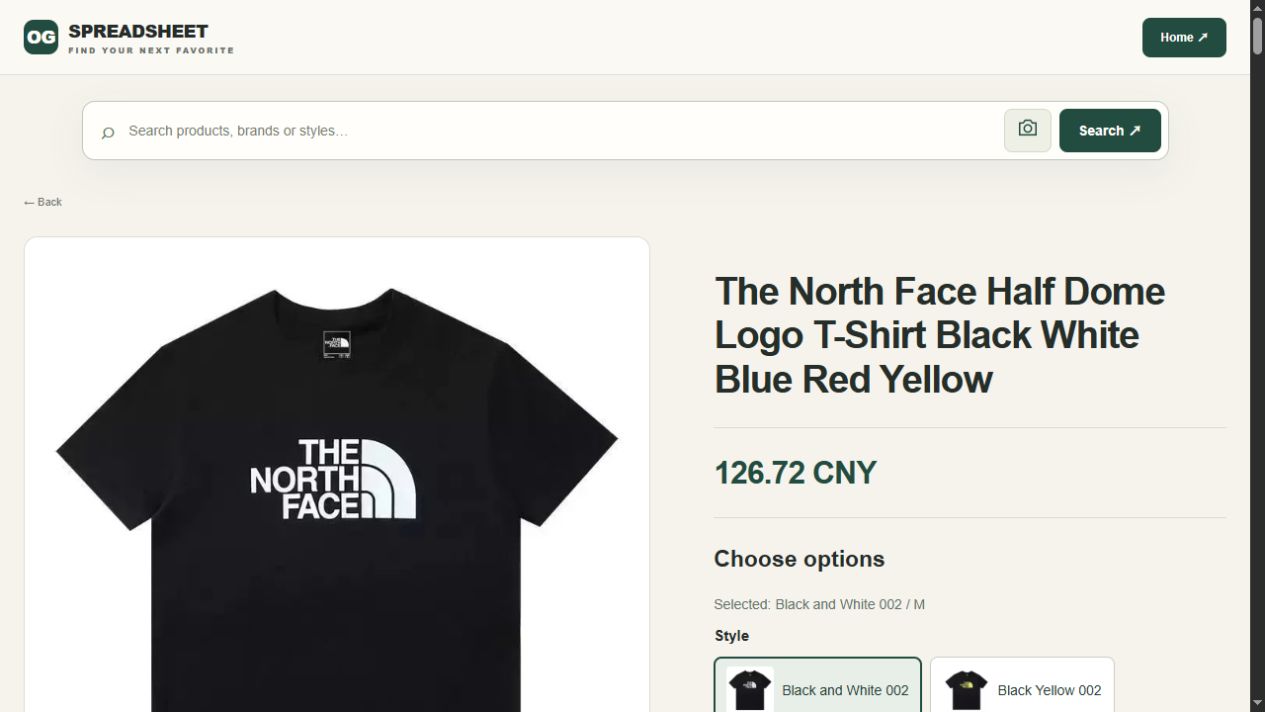
A T-shirt candidate can be saved with its selected variation and remaining fit questions attached. Compare the actual design and measurements at the destination rather than carrying details across from a different shirt. Its presence in the collection does not establish authenticity, current stock or personal testing.
Inspect the T-shirt before adding it to your shortlist
Use the T-shirt guide to compare the garment's proportions. If the option details are unclear, retain that as a question rather than replacing it with a confident but unsupported description.
Refresh the entries that affect the next action
Before purchasing, revisit the candidate and relevant options. Check whether the destination, selected offer or included pieces have changed. A previous check is useful history, not proof that every detail remains current.
Preserve the earlier record when a meaningful difference appears. If a listing is replaced, identify the new candidate as a replacement rather than silently transferring old observations to it. The archive guide helps keep that history understandable.
For a shared collection, describe what was checked without implying that every link resulted in a purchase. A dated listing check and a received-order inspection are distinct levels of information.
Keep the collection navigable
Group your saved choices by the items you plan to compare, keeping alternatives beside the relevant candidate. Use labels that distinguish the model and option rather than repeating click-here text. Keep your next action visible: check a measurement, clarify included pieces or remove a candidate that no longer fits the plan.
The best spreadsheet guide explains how useful organisation and recoverable details support comparison. A link count alone cannot establish the strength of a collection.
Collection questions
Is a larger link list always more useful?
No. Repeated or unclear entries can make the decision harder. Keep the product choices and their important differences easy to recognise, especially when two listings use similar photographs.
Should I delete every old link?
Keep useful history separately from current candidates. An older record can explain a prior choice without being presented as a current offer.
Can I reuse one buyer's QC pictures across similar links?
Only treat them as evidence of the particular item and context they actually show, with appropriate permission and privacy handling. They do not verify every visually similar candidate. The QC guide explains this boundary.