
USFans T-Shirts: Compare the Cut Behind the Picture
A USFans T-shirt shortlist becomes useful when it explains why one option suits your intended fit better than another. Colour and graphics may attract your attention, but the difference between a shirt you wear and one you leave aside can be its length, shoulder position or sleeve shape.
Save the exact variation in your USFans spreadsheet, then compare those details with a T-shirt you already know. Do not let a shared size letter stand in for a comparison of the garments.
Decide what kind of shape you are choosing
Start with the result you want: a closer layer, a straight everyday cut or a wider silhouette. Treat descriptions such as oversized as prompts to inspect measurements, not as standardised dimensions.
Check body width and length together. Increasing width without increasing length creates a different shape from simply choosing a larger size in the same cut. Shoulder and sleeve measurements add further context, especially when the design has dropped shoulders.
The size guide explains how to compare measurements using the same endpoints. If one chart measures from the shoulder and another from the collar, establish that difference before treating the numbers as equivalent.
Compare a known garment with the selected option
Use a reference T-shirt whose fit you understand. Lay it out in the same way described by the candidate's measurement instructions, without stretching it to force a match. Keep the units and measurement method with the numbers.
For an illustrative comparison, a reference garment 52 cm wide across the same chest endpoints and a candidate listed at 56 cm differ by 4 cm in flat width. That does not mean a 4 cm difference in body circumference, nor does it establish how the candidate feels when worn. It is a comparison of two specified measurements, not a recommendation to choose a particular size.
Consider where the hem falls on your reference garment and whether you intend to tuck the new shirt. A chest measurement alone cannot settle the length decision.
Separate visible design from fabric assumptions
Inspect the neckline, pocket or graphic placement, sleeve shape and hem in the listing. Check that the images relate to the option you intend to buy. Some galleries show several colours or versions; the first picture does not necessarily describe every selection.
A photograph does not establish fibre composition, fabric weight, softness or resistance to shrinking. If one of those properties is essential, seek the relevant product information rather than inferring it from how substantial the shirt looks in a picture. A printed number or material claim in a listing is also not a laboratory test.
Do not invent a washing method from the appearance of the fabric. Follow the care information supplied for the actual garment when available, and ask about unclear instructions before treating the item as suitable for your routine.
Check the details that would change your decision
For a pocket tee, useful questions may concern pocket placement and the selected colour. For a graphic tee, they may concern which print version is included. If you need a close-up, specify the area rather than asking for a general judgement of quality.
When images of your received item are available, first match them to the correct order. Then compare the label and visible design with the selection you saved. A size label can confirm what the label says; it cannot replace an actual garment measurement.
The QC photo guide describes how to ask a photograph to answer a bounded question. It does not treat another buyer's images as proof of your item's condition or a warehouse image as proof of durability.
Inspect a T-shirt candidate
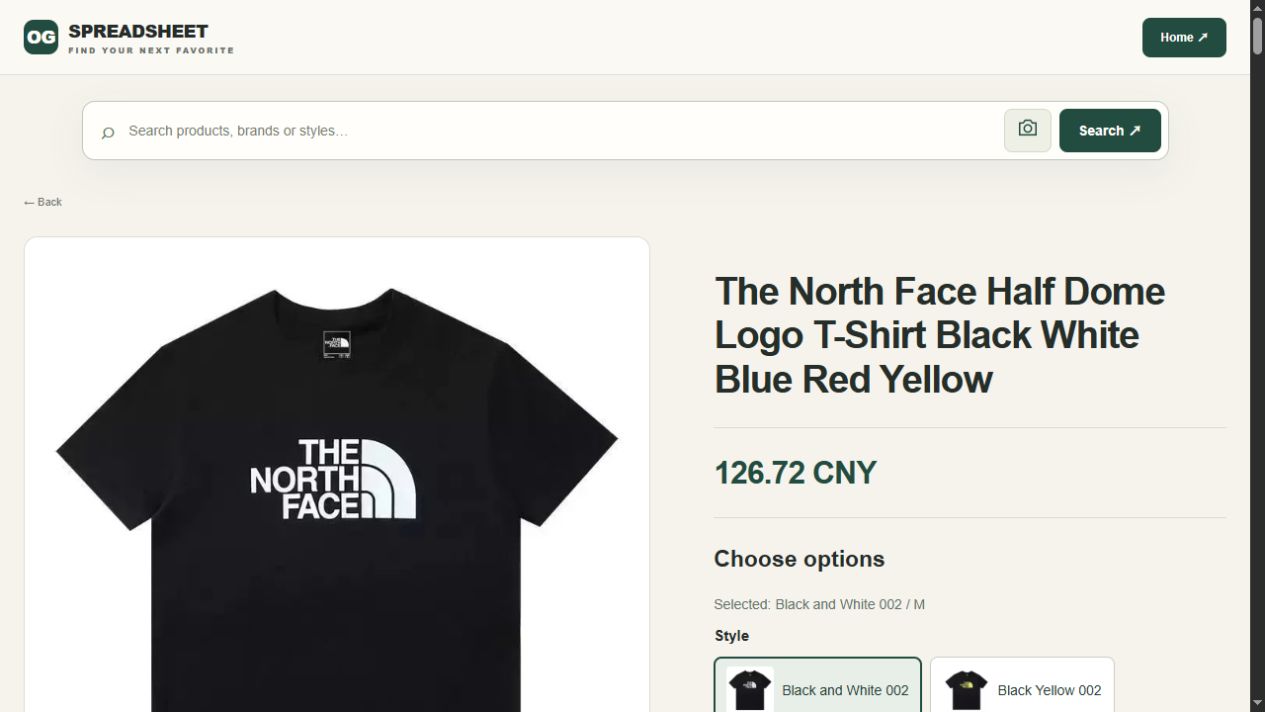
Use the linked T-shirt listing to identify the candidate and inspect its selected variation. Compare the actual neckline, sleeve shape and garment measurements instead of transferring details from another shirt. The title does not verify authenticity, fabric composition, available stock or fit.
Examine the T-shirt details on OG
If you save it, retain the exact option with the link. The spreadsheet links guide helps avoid returning to a gallery and accidentally choosing a different version.
Build a small comparison instead of a repeated shopping list
For each candidate, record the feature that distinguishes it and the question that remains. One might have the shape you prefer but unclear length information; another might provide a useful chart but show several ambiguous colours. Those are different reasons to seek clarification.
The best spreadsheet guide explains why a collection's usefulness depends on recoverable details, not merely on how many products it contains. Keep rejected candidates identifiable if their details explain why you moved on, rather than saving them again as new finds.
Before adding several shirts to one parcel, check quantities and variations individually. Then use the shipping guide to separate their product prices from the cost of the actual shipment. A lightweight-looking T-shirt does not establish the packed weight of your combined order.
T-shirt questions
Can I use the same size for every brand name in a spreadsheet?
No shared letter guarantees a shared cut. Compare the actual product chart and measurement method with a known garment, then consider the shape you want.
Does choosing a larger size always create an oversized fit?
It changes the selected size, but not necessarily in the proportions you want. Examine width, length, shoulders and sleeves rather than assuming all dimensions will work together for your intended silhouette.
Should I approve an item that has the right label but looks different?
Resolve the specific difference first. Match the saved option, ask for a relevant view or measurement where needed, and check the available return procedure before committing an unresolved item to shipment.