
USFans Spreadsheet Archive: Keep Old Finds Without Losing Their History
An older USFans spreadsheet entry can still help you recognise a style or remember an option you considered. Its value changes, however, when the price, destination or selected version no longer matches what you can inspect today. Keep the earlier observation as history instead of quietly turning it into a current recommendation.
The aim of an archive is not to make every old row look active. It is to preserve enough context to understand what the row meant and decide whether the candidate deserves another look.
Keep three dates separate
A collection's title year, the date you saved an entry and the date you last opened its product page describe different things. A page labelled 2026 does not establish that each product was checked during 2026. A recently downloaded copy can contain much older observations.
In your own notes, record when you inspected the detail you intend to use. If you only revisited the address, do not treat that as a fresh check of the size chart, price and availability. Rechecking one field does not automatically refresh the rest.
The spreadsheet links guide covers destination checks. Use the archive record to remember what needs checking, not to skip that step.
Preserve a changed observation instead of overwriting it
Suppose an older entry described a particular jacket colour at an observed price. On a later visit, another colour is selected or the price differs. Keep the old note attached to its date and add the new observation separately.
Do not immediately conclude that the price of the same item increased. The selected variant, quantity or included pieces might have changed. Establish that the comparison concerns the same option before interpreting the difference.
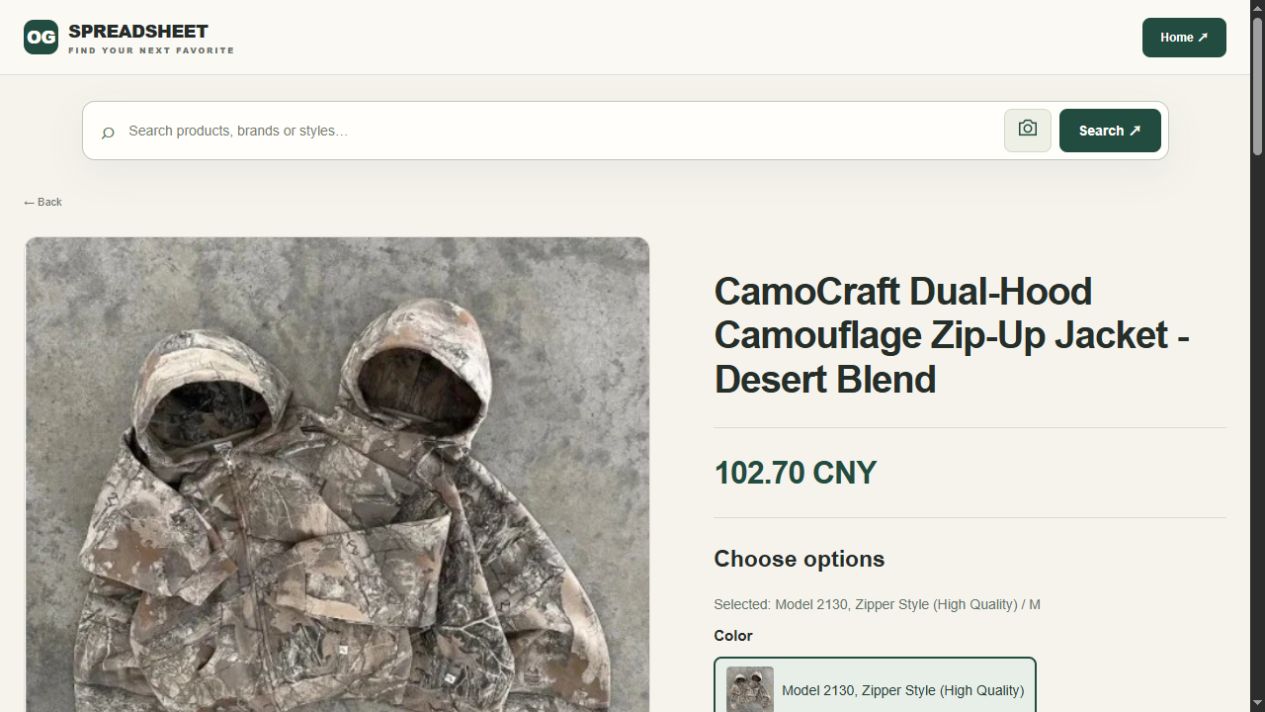
For a candidate, you can inspect the jacket on OG. Compare the current selected option with your own dated record before interpreting a price change. The destination alone cannot reconstruct an earlier offer: retain the earlier currency, quantity and included contents with the price you observed.
Compare equal fields before describing a change
A saved heading check from 30 September 2026 and a selected-option screen from 1 October answer different questions. The latter shows Model 2130 Zipper Style / M at 102.70 CNY on this jacket address. Since the earlier record contains no matched option quote, it cannot establish a saving or increase. Preserve the newer selection separately from the older identity check.
Distinguish a broken destination from a replacement
If the old link stops opening, retain its original identity in your private notes. A similar-looking listing may help you continue shopping, but it becomes a new candidate until you have established what matches.
| What you find on a return visit | How to keep the record useful |
|---|---|
| Same listing and recognisable option | Recheck the details needed for the new decision |
| Same listing, different selected option | Restore or separately record the intended variation |
| Different listing with similar images | Compare it as a replacement candidate |
| Destination unavailable | Retain the old context without describing it as orderable |
Do not move old measurements or a buyer's photographs onto a replacement simply because the thumbnail resembles the original. The QC guide explains why images need to remain attached to the item they actually concern.
Remove duplicate clutter without merging different choices
Several saved addresses may lead to the same product. If they also concern the same option and contain no different observations, one organised entry can be easier to use than several indistinguishable copies.
Different options are not necessarily duplicates. A small and large size, a single garment and a set, or two colour versions may need different measurements and cost checks. Preserve those distinctions before simplifying your list.
The best spreadsheet guide discusses why row count alone is a weak measure of usefulness. An archive becomes more valuable when the distinctions are clearer, not merely when it becomes longer.
Keep older experiences within their limits
A delivery account from an earlier order describes that journey, not a promise for a new parcel. An older coupon screenshot does not extend an offer. A return outcome does not establish that the same remedy applies to another seller, item or stage.
Retain the original date and context when those experiences help you ask a question. Then obtain the information relevant to your present purchase. The spreadsheet review helps separate an earlier observation from a broader conclusion about the service.
Decide what to carry back into an active shortlist
Bring an archived candidate back only after identifying the listing and resolving the details that matter to you now. That may mean checking a measurement, confirming what is included or recalculating the parcel budget. A familiar entry should not receive less scrutiny simply because you saved it months ago.
Keep personal information out of a shared archive. Product destinations and useful garment notes can be retained without storing somebody else's order identifier, address label or account screenshot.
Return to the USFans spreadsheet for your active candidates and use the buying guide when a refreshed selection is ready for the next decision.
Does an archived product mean it is unavailable?
No. Archive status describes the record's role. Reopen the destination to investigate present options rather than assuming either availability or disappearance.
Should I delete every old entry?
Keep records that still explain a useful style or comparison. Separate them from current candidates so that old observations are not mistaken for fresh ones.
Can I update the year on an old collection?
Changing the title does not refresh the entries. Record what was actually checked and retain the earlier context where it matters.