
USFans Jackets: Compare the Closed Fit, Not Only the Styled Photo
A jacket photographed open can look easy to wear while leaving the most important fit question unanswered: how will the selected size work when closed over the clothes you intend to wear? Begin a USFans jacket comparison with that use in mind, then inspect length, sleeves and construction details together.
Save the exact candidate in your USFans spreadsheet. Keep its selected variation separate from related jackets that share a colour or broad style name.
Name the job you want the jacket to do
Distinguish a light visual layer from an outer garment you expect to protect you from particular weather. A denim-style jacket, a padded coat and a shell should not be compared as if a similar photograph establishes equivalent function.
If weather protection is essential, seek reliable information for the actual product and intended use. Do not infer waterproofing from a shiny surface, wind resistance from a close-fitting cuff or a temperature rating from visible padding. A product title can help identify the listing without proving those properties.
For a primarily style-led purchase, make your criteria concrete: body length, collar shape, closure, pocket arrangement and how it sits with the clothes already in your wardrobe.
Compare with a jacket worn over the same layers
Choose a reference jacket whose fit you understand while wearing the intended inner layer. Compare its measurements with the candidate's chart using matching endpoints and units. Do not compare a body circumference directly with a flat garment width.
Look beyond the chest. Shoulder construction and sleeve length affect how a jacket sits, while the hem and body length determine its relationship to your trousers or a longer shirt beneath it. If the jacket is meant to close, check the measurements relevant to that closed shape rather than relying on a photograph with the zip open.
The size guide explains how to read the measurements. For a thicker inner layer, the hoodie and sweater guide helps you keep both garments' proportions in view. Simply choosing a larger jacket size can also change sleeve and body length.
Inspect closures and included parts
Read the selected offer to establish whether the garment has the hood, belt, lining or removable part shown in the images. Do not count a styling accessory as included unless the offer says it is.
For a zip-front design, inspect the layout and the areas around the zip. For a buttoned jacket, check the visible fastening arrangement. These observations help identify the design; they do not test the closure's durability or prove that every part operates correctly.
If a detail is essential, ask a specific question before ordering. “Is this hood included in the selected variation?” is clearer than asking whether the whole item matches every image in a mixed gallery.
Keep lining and material questions separate
An exterior photograph cannot fully establish the interior. Look for the information relevant to your question: whether a lining is stated, which composition applies to the selected version and what care information accompanies it.
Avoid turning appearance into a material claim. A denim-looking weave does not establish a precise fibre percentage, and a smooth surface does not establish leather. Likewise, a listed material description is not independent verification of the received garment.
If the purchase depends on a specific property that remains unclear, treat the candidate as unresolved rather than writing that property into your saved notes as confirmed.
Match received-item checks to your concerns
When photographs of your own jacket become available, confirm the order and variation first. Then inspect the areas that matter: label, chosen colour, closure, visible seams or an apparent mark. Ask for a relevant additional view if the existing images cannot answer the question.
For a size concern, specify the measurement and its endpoints. For an included-piece concern, request confirmation of that piece. The QC photo guide distinguishes these checks from claims about authenticity, comfort or weather performance.
If the received item differs from the option you selected, resolve the discrepancy before treating shipment as automatic. Consult the returns guide for how to frame the request without assuming eligibility or a particular refund outcome.
Examine a jacket candidate
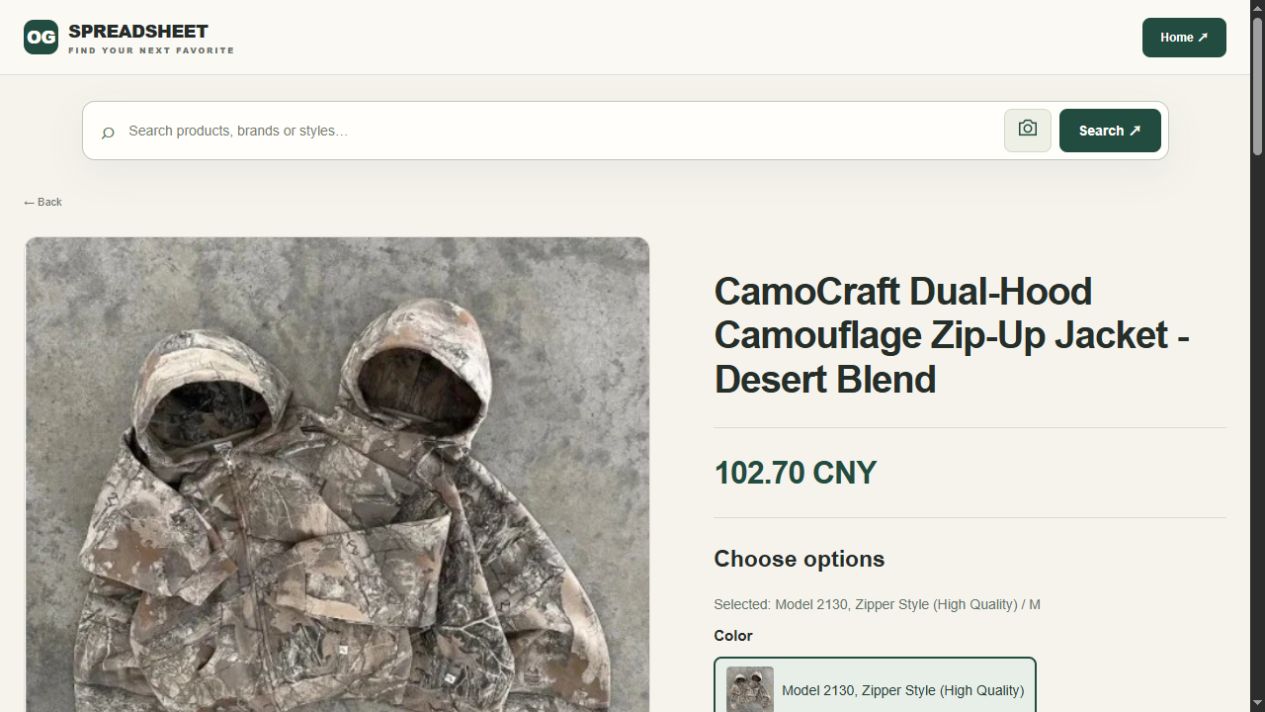
Inspect the linked jacket's actual design and selected variation against your layering needs. Check its closure and included details at the destination instead of applying features from another saved jacket. The listing is not proof of composition, stock, authenticity or fit.
Inspect the jacket candidate on OG
Keep the product link with the option you mean. The spreadsheet links guide explains how to avoid accidentally replacing a saved candidate with a different version from the same gallery.
Consider the packed parcel before adding another outer layer
A photograph does not tell you how much space the garment will occupy after packing. Adding a jacket can change the parcel configuration, so refresh the estimate with the available measurements rather than extending an earlier weight-only guess.
The shipping guide explains actual and volumetric weight. Check packing choices in relation to the garment and its protection needs; do not assume every item can be compressed in the same way without consequences.
Jacket questions
Can a photo confirm that a jacket is waterproof?
No. Its appearance is not a performance test. Use appropriate product information for the exact garment and intended conditions instead of treating the styling image as a technical specification.
Should I choose one size larger for layering?
Compare the candidate's measurements with a jacket that works over the intended layer. A universal size increase can change proportions you did not want to change.
What if the title and selected option describe different details?
Clarify the selected offer before purchasing. Retain the conflicting details with your question rather than assuming the more attractive description will apply.