
USFans Hoodies and Sweaters: Choose the Layer, Then Check the Option
A hoodie, a zipped sweatshirt and a knitted crewneck can fill different roles even when they share a colour. Before adding USFans hoodie or sweater finds to your shortlist, decide how you expect to wear the layer: over a tee, under a jacket, open at the front or as the main visible piece.
That choice gives the measurements a purpose. Instead of collecting several similar photographs, keep the option whose shape and details answer your actual clothing question in your USFans spreadsheet.
Separate the garment type from the search label
An Essentials search may lead to several garment types and variations. A Nike Tech search may concern a top, trousers or a coordinated outfit. Confirm what the selected offer contains before comparing prices or treating a product image as a complete set.
Keep a pullover distinct from a zip-front design, and a knit sweater distinct from a sweatshirt. Read the selected variation and its chart rather than allowing a broad collection name to stand in for the product itself. The spreadsheet links guide helps preserve that distinction when you revisit the page.
Compare the layer with one you already wear
Choose a reference garment that serves the same purpose. A close-fitting T-shirt is not automatically a useful sizing reference for a roomy hoodie worn over other clothes. Compare equivalent measurements using the same method and units.
Read chest width with body length, shoulder construction and sleeve length. A dropped-shoulder design changes where a sleeve measurement begins. A shorter body with greater width also creates a different silhouette from a longer garment in a larger size.
If you intend to wear a jacket over the layer, consider the space needed at the arms and shoulders as well as the chest. Do not assume that one size increase will solve every proportion. The size guide explains the limits of size letters and mismatched measurement methods.
Look closely at the opening, cuffs and hem
For a zipped garment, identify the zip layout and the neckline you intend to wear. For a pullover, consider the opening and hood arrangement shown. For a crewneck sweater, compare the neckline and visible knit pattern with the selected variation.
Cuffs and hems affect the visible outline: a garment that gathers at the hem may sit differently from one with a straighter edge. A listing photograph can help you notice those design features, but it cannot establish the precise tension, stretch recovery or comfort of the received item.
Do not infer warmth from a thick-looking fold or assume that a textured knit contains wool. Fibre composition, fabric weight and care requirements need their own product information. Keep any unverified property out of the confirmed details on your shortlist.
Request checks that relate to the selected garment
Once your own item has been received, match its record and photographs to the saved variation before inspecting small details. A colour or label discrepancy is a different question from a measurement discrepancy.
Useful views depend on the design. A zip-front candidate may need a clearer view of its closure; a knit may need a close-up of an apparent snag; a graphic hoodie may need the chosen graphic version confirmed. Explain which detail would change your decision instead of requesting a blanket quality judgement.
The QC photo guide keeps these observations separate from performance claims. An image cannot show how a zip will last over months, whether fabric will pill after use or how warm the garment feels outdoors. Do not label those properties as tested merely because the appearance looks satisfactory.
Consider one hoodie candidate
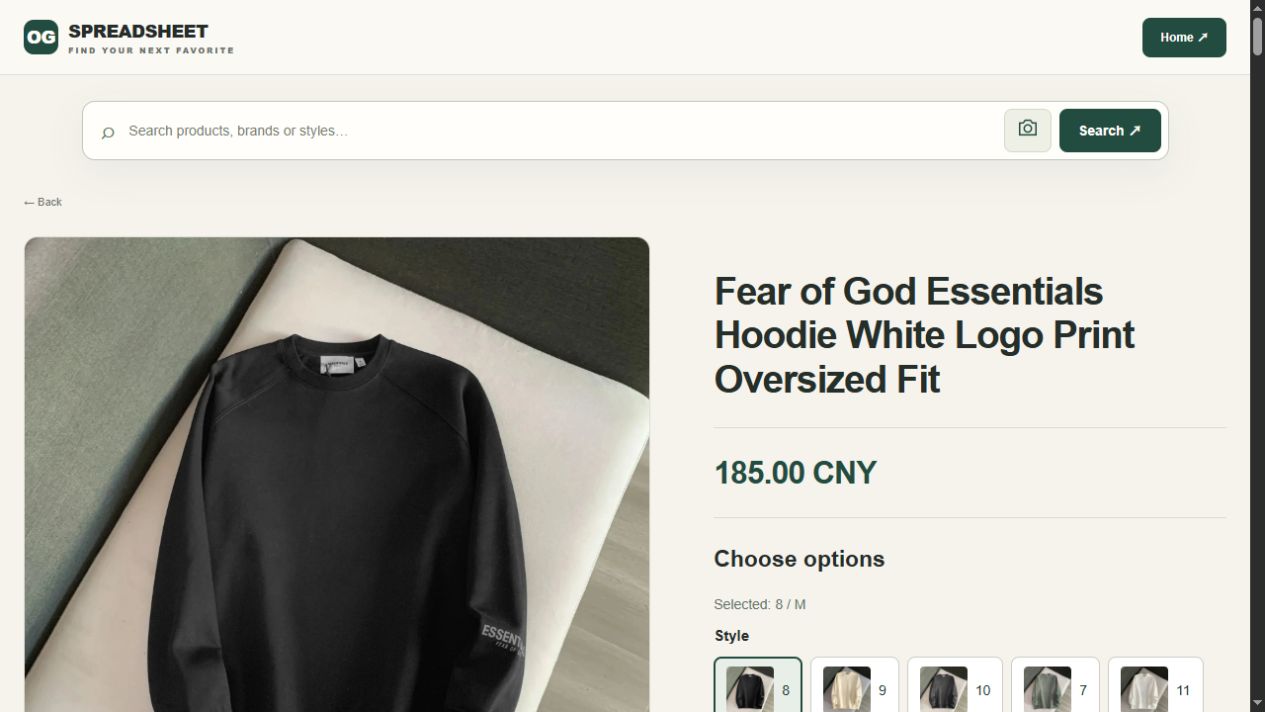
Inspect this upper-layer candidate against the type of garment you want. On 1 October 2026, style 8 / M showed a black crewneck under the hoodie heading. Compare its neckline, body length and sleeves rather than carrying the hood from the title into the selected garment.
Explore the hoodie details on OG
Retain the variation you actually consider, then compare it with a hoodie you already wear using the same measurement method. If the required details are unclear, ask before turning the candidate into an order.
Check what the purchase adds to the parcel
Keep each garment and selected quantity identifiable when combining a shipment. A large-looking hoodie and a lighter-looking knit do not establish their packed weights or volumes. Use the measurements available for the actual parcel when reviewing transport cost.
The shipping calculator guide explains how to revise an estimate after the contents or packing change. If the item itself has an unresolved issue, consult the returns guide before treating international dispatch as the next automatic step.
Hoodie and sweater questions
Does an outfit photo mean the trousers are included?
No. Read the selected offer and included pieces. If the option is a top only, a matching pair of trousers shown in the gallery does not make it a set.
Can I tell whether a sweater is warm from the picture?
Not reliably. The visible texture may guide a style comparison, but warmth and material properties require more than the image. Do not substitute a seller's styling choice for product specifications or a relevant test.
Should I use my T-shirt size for a hoodie?
Compare the product's measurements and intended layering space instead. The same size letter can describe different proportions across garment types and listings.
How do I avoid saving the same find repeatedly?
Keep its link, variation and the question you still need answered. The best spreadsheet guide explains how recoverable details make a smaller comparison more useful than an unstructured list of similar pictures.