
USFans Pants and Shorts: Read the Measurements as a Shape
When saving USFans jeans, trousers or shorts, a waist label is only the beginning of the comparison. Two candidates can have similar waist measurements yet differ at the rise, thigh and leg opening. Those differences affect the shape you are choosing, even before fabric and personal comfort enter the decision.
Keep the selected size and version beside the product link in your USFans spreadsheet. Compare the whole set of relevant measurements instead of replacing one size number with another and assuming the fit is settled.
Start from trousers that already work for you
Choose a reference pair with a similar intended use and rise. Read the candidate's measuring instructions, then measure the reference using the same endpoints and units. A body measurement and a flat garment measurement are not interchangeable.
If a chart provides waistband width, establish whether it is measured relaxed, stretched or as a circumference. Do not compare a relaxed elastic waistband directly with a rigid waistband without accounting for that different method. Nor should the maximum stretched measurement be treated as a promise of comfortable everyday fit.
Use the size guide when the chart's labels are unclear. Ask for clarification before letting a familiar size label override conflicting dimensions.
Read rise and length together
The rise concerns the distance from the crotch area to the waistband under the specified measuring method. Inseam and outer length use different starting points. Do not substitute total garment length for inseam or assume that equal overall lengths create the same position at the waist and ankle.
For shorts, consider the leg length and opening alongside the rise. A short inseam can produce a different silhouette depending on where the garment is designed to sit. Compare these details with your reference pair rather than relying entirely on the model's pose.
For jeans, also look at the intended relationship with footwear. A wider opening and a tapered opening can sit differently over the same shoes. The shoe guide helps keep the footwear choice separate from assumptions about trouser length.
Distinguish a cut from a size increase
Choosing a larger waist size does not necessarily reproduce a wide-leg cut. It can change the waistband and rise as well as the leg dimensions. Similarly, selecting a smaller size is not a reliable way to turn a relaxed pattern into a fitted one.
Read the available thigh and leg-opening measurements where relevant. If the listing uses a broad description such as loose or slim, treat it as a design label to investigate rather than a standard measurement shared by every seller.
For a USFans spreadsheet jeans comparison, retain the wash or colour variant too. A mixed gallery may contain different versions, and the first photograph may not identify the one attached to your selected option.
Keep fabric and function questions distinct
A denim appearance does not establish fibre composition, stretch, shrinkage or colourfastness. A sports-shorts photograph does not prove moisture handling or performance during exercise. Seek the product information needed for those questions without turning an image into a test result.
Inspect the visible closure, waistband and pocket arrangement, but verify a feature that matters before relying on it. A decorative seam can resemble a pocket opening; a pictured belt or accessory may not be included in the selected offer.
Where the information remains unclear, record the question with the candidate. The spreadsheet links guide explains how to keep that unresolved detail attached to the correct product rather than losing it when browsing another variation.
Ask received-item photographs to answer a specific question
Match the order and selected option before inspecting the images. If the concern is length, request the relevant measurement with the endpoints visible. If it is the chosen wash or a visible mark, request a suitable view of that area instead.
The QC photo guide separates visible condition from conclusions about comfort or long-term wear. A label photograph confirms the label's wording, not every dimension of the garment. Another buyer's similar pair does not establish your own item's condition.
If the item differs from the variation you ordered, resolve the discrepancy before deciding to ship it. Consult the returns guide for framing the next request without assuming that every garment has identical return conditions.
Inspect a wide-leg jeans candidate
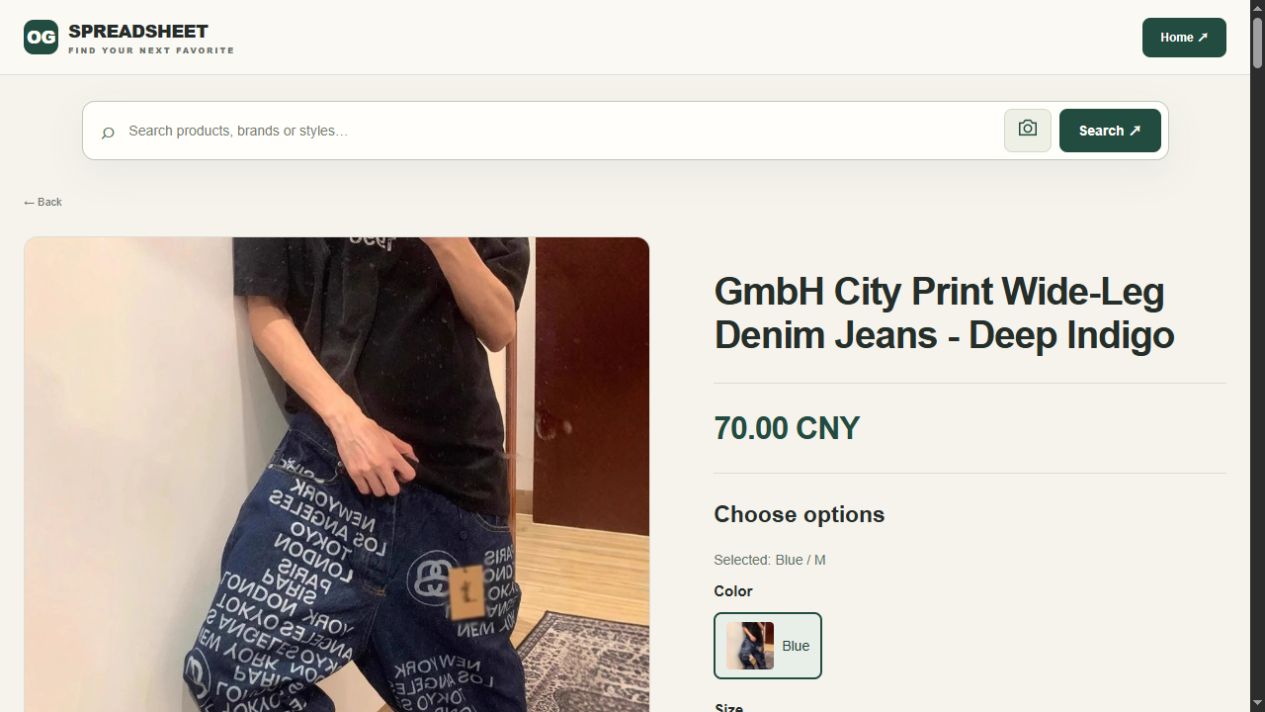
OG product 134380 is listed as deep-indigo wide-leg denim jeans with a city-print design under the GmbH name. Use it to inspect a concrete candidate and the available option details. The title does not verify authenticity, composition, measurements or stock.
View the wide-leg indigo jeans details on OG
Compare the candidate with a reference pair using matching measurements. If you cannot identify the selected size and version, keep it as a browsing candidate rather than a completed purchase decision.
Compare the parcel, not just the price tag
Check the quantity and selected variation when adding multiple pairs to an order. Keep their records distinct so that one received pair cannot be mistaken for another with a similar colour.
The shipping guide explains why a product price is not the whole transport budget. Use actual parcel information when it becomes available; a garment's appearance or advertised cut does not establish its packed weight.
Pants and shorts questions
Can I choose jeans from waist size alone?
That leaves rise and leg proportions unresolved. Compare the measurements relevant to the fit you want, using the chart for the actual selected product.
Does an elastic waist remove the need for measurements?
No. Establish the measurement method and compare the other dimensions too. Stretch at the waist does not establish room at the seat or thigh.
Can a photograph prove the pockets are functional?
Not always. Ask about the specific construction if that feature matters, rather than treating a visible outline as confirmation of usable storage.